What's New
The Peanut Butter Church, the Nickel Payphone and the Making of Gretchen Guess
She was the youngest woman ever elected to the Alaska Senate. She runs the state’s largest private foundation. She still believes the most powerful thing about public service is answering the phone.
By Ross Johnston, Commonwealth North

The first time Gretchen Guess remembers doing the work, she was six or seven years old, standing in her kitchen with a spoon.
Her family’s Episcopal parish was the “peanut butter church” for a local food pantry. Her mom would buy peanut butter in enormous jars, and she would scoop it into empty yogurt containers for the pantry to give away. Guess had been carried into boardrooms and fundraisers since before she could walk, but this was different. “That was the first time I actually remember giving back, where I was doing the work,” she said.
Five decades later, Guess is the president and chief executive of Rasmuson Foundation, the largest private funder in Alaska, and a new member of the Commonwealth North board.
A house where anyone could come home
Guess grew up on Anchorage’s east side in a household where service was not a value so much as a routine. Her father, Gene Guess, was speaker of the Alaska House from 1971 to 1973, in the years after the state knew it had oil but before the pipeline or the Alaska Native claims settlement had reshaped it. He died of a ruptured brain aneurysm when she was five.
“I grew up with everyone telling me he was a great man,” she said. “I didn’t really understand his job until I served.” Only later, looking at photographs from the 1960s, did it land: her father, Ted Stevens, Willie Hensley, all of them so young, all of them building a state together.
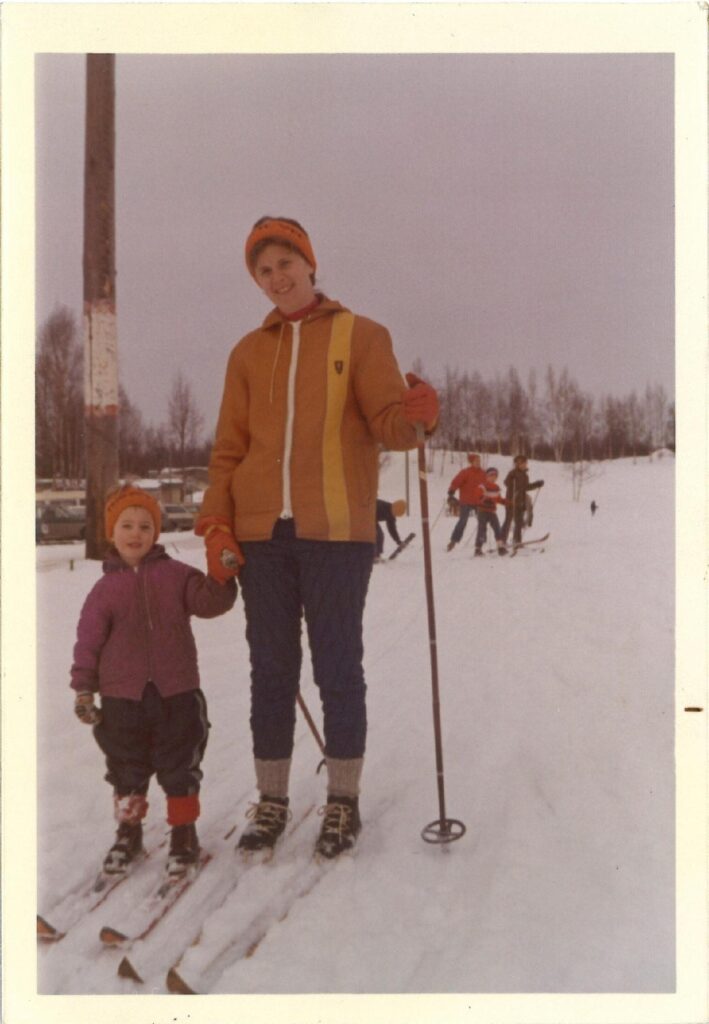
Her mother was widowed at 40 with four children, ages 5, 9, 11, and 13. A teacher by training, she had started Alaska’s “Romper Room” on television. Then she was appointed to the Public Utilities Commission, the forerunner of today’s Regulatory Commission of Alaska, a job she never went to school for and may never have loved, but took with total seriousness.
Two decisions gave her mother heartburn, she used to tell her daughter. One was when the payphone went from a nickel to a dime; she worried about a kid somewhere who needed to call home and only had a nickel. The other was the commission’s choice not to regulate cable television, because she did not think TV was a utility and could not imagine the internet.
Her mom kept volunteering through all of it. She chaired the Girls Club when it merged with the Boys Club. She became the first woman senior warden in the Episcopal Church in Alaska. She sat on Tony Knowles’s kitchen cabinet through his runs for Assembly, mayor, and governor. And she ran a house where any of her children could bring anyone home, at any hour, and where kids who needed a place sometimes stayed a night and sometimes stayed for months.
“Mom would come home from a long day at work and not skip a beat when there was some random kid sitting at her dining room table,” Guess said. “What I learned from it is you’re always of service. There’s good in everything you do.”
Then, drily: “And there’s nothing like having a parent that knows what the cost of every kilowatt hour is. You learn how to turn off your lights.”
Number 60, first floor, in the corner
Guess had worked on campaigns her whole life and had just finished serving as treasurer of the Knowles-Ulmer reelection campaign when Allen Kemplen called. He had promised his wife he would not run again for his House seat. Would she?
“I answered the question ‘could I do it’ versus ‘should I do it,'” she said. She could. The first time she went door to door, it took her hours to leave the house. Being part of a campaign was one thing. Being the candidate was something else.
She won and arrived in Juneau in 2001 as a freshman in the minority. “Number 60, that was me,” she said. Her office was on the first floor, in a corner, about as far from the House floor as the building allowed. She loved it anyway. When she won her Senate seat in 2002, she became the youngest woman in state history to do so at 32.
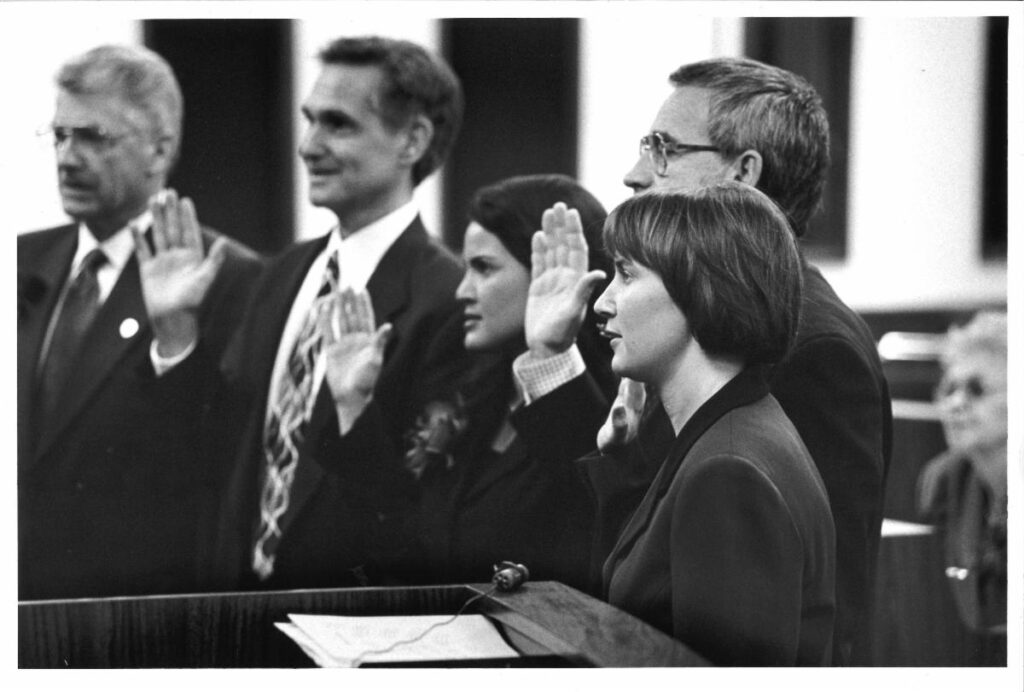
The stories she tells from those years are not about big bills. They are about phone calls.
There was the woman in Fairview whom Guess met while knocking on doors, a mother of three small boys who had finally left her husband after he hit her while their son sat in her lap. Later, the woman called the office: her husband was out of jail, and the state had placed him in a halfway house a block from her home. Even from the bottom of the seniority list, Guess got him moved. Nine years later, when Guess was on the Anchorage School Board, the same woman called again about a principal who would not honor a restraining order. She resolved it.
“You can be a voice for someone,” Guess said. “I just think that’s the most powerful thing about public service.”
There was the father who called after the Office of Children’s Services took his kids and told him he had to complete anger management to get them back. Guess looked into it, as she always did. The state was right. She dialed him back, braced to be yelled at. Instead, he thanked her. “I just needed someone I trusted to look into it,” he told her.
The legislation she is proudest of tends to be small and stubborn. A bill, two and a half years in the making, requiring that a space used as a drug lab be professionally cleaned or tested before it could be rented again. An amendment tying the Alaska Military Youth Academy’s funding to the base student allocation so it would finally grow with need. A fix to the state’s violent crimes compensation law, written in the early 1970s to deny payments to people participating in the violence (e.g., started a bar fight), that was being used to deny compensation to women who had been sexually assaulted.
“I did all the big stuff,” she said. “But the little fixes are the things I really enjoyed.”
The last exit before Georgia
In 2013, she left. Her husband had grown up in Florida and wanted to go home, and the children were young enough to move. She took a health care job in Jacksonville, moved into operations, and learned to run large, complex organizations, at one point with 900 people reporting up to her. She uses that knowledge every day, she said. “It’s just a different mindset to be an operator.”
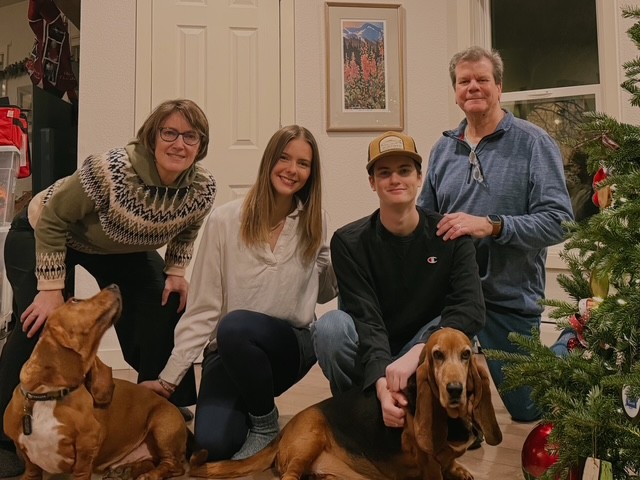
She also learned that she was not a Southerner, a fact often pointed out to her. Jacksonville, she said, is the Deep South, “the last exit before Southern Georgia.” She had lived in Minnesota, DC, LA, Seattle, and New York. She had never lived anywhere like that.
And Guess learned how tied she was to Alaska. She read the Anchorage Daily News every day. She brought the family north whenever she could. When the plane descends into Anchorage, she said, there is always the same involuntary thought: “Oh, my mountains.”
When the Rasmuson Foundation CEO position opened up in 2022, she planned to stay in healthcare, but the role called to her. She came home in early 2023 as only the second chief executive in the foundation’s history.
Staying the course
The Alaska she returned to looked mostly familiar. “When I left the legislature, we were talking about a fiscal plan and a gas line,” she said. “What are we talking about now? A fiscal plan and a gas line.” What did surprise her was that the legislature now sets the dividend. What worries her is affordability, which has always been hard in Alaska and, in the last three years, has become something else entirely.
At Rasmuson, her first major decision was to focus on culture and operations. Her second major decision was to change nothing when federal funding shifted. She decided the foundation’s most valuable service was certainty: same programs, same approach, no COVID-style pivots. Roughly 60% of its grantmaking remains responsive to community need.
The other 40% has been to meet the moment. Rasmuson was an early and large funder of the public media fund after federal cuts. It shored up food banks last November during the SNAP disruption. It is leaning into after-school care. And it is increasingly open to bridge funding.
Gretchen, the Rasmuson team, and her board spend a lot of time outside Anchorage, in 45 to 50 communities each year. Four times a year, they hold open community conversations in a town, where they meet grant recipients and local leaders. Next week she will be in Unalaska. “We can tell you what the top issues of the state are,” she said, “because we hear them.”
Wonking out with really cool people
Her path to the Commonwealth North board began on a walk with Gloria O’Neill, who had just returned from a board retreat. Guess listened and thought: that would be a fun board to be on.
It solved a problem she had been carrying. As CEO of Rasmuson, she had found she could not sit on a traditional nonprofit board. “My voice carries too much,” she said. So she had set herself a goal: find ways to give back, where what she does during the day does not matter. Her church vestry. Anchorage board of ethics. Food delivery. Commonwealth North.
“I don’t get to do public policy anymore. In fact, I purposely stay out of it,” she said. “So now I get to wonk out on my favorite topic with really cool people and think about the state.”
From the inside, she has been struck by the breadth of the organization’s work and by what it takes to build a meaningful panel every month. She sees Commonwealth North’s greatest asset as its reputation as a neutral platform, and she would like to see it lean harder into that role by putting more policy options in front of the people who make decisions. Not answers, she is careful to say. Ranges of choices, on problems everyone knows about but no one is solving.
The list comes quickly. Why utility hookups cost so much in every community and what that does to housing. What happens when a military base moves 400 families into a town with no vacancies and then moves them back out? Whether the borough system still works, or whether the state’s unorganized boroughs make sense at all. What became of oil revenue sharing with communities?
“I think about public policy all the time,” she said.
Her current preoccupation is closer to home. “Right now I’m into, can Anchorage stop being the victim of the feds and the state, and say, we’re going to be a city?” she said. “Can we just stand up and say we want to have a nice city, and stop being like, oh, woe is us?”
The cove
Asked where she goes to feel most like an Alaskan, she did not hesitate. Halibut Cove, where her family had a cabin when she was growing up. She gets there once a year and wishes it were more. She was berry picking the weekend before this interview. She rides her bike. She will do anything to be outside. But her place is the cove.
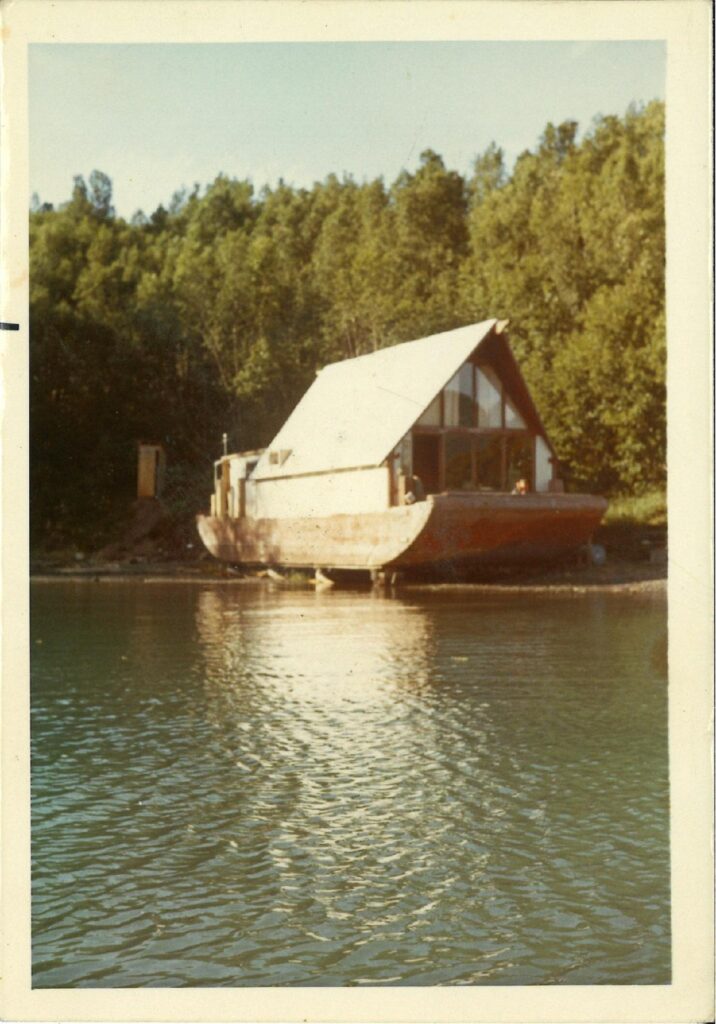
What makes her Alaskan, though, is not the landscape. “It’s a people thing,” she said. Someone slides into the ditch near your house and you grab your shovel. Someone hands you a cart at Costco. “There’s just a kindness, a neighborliness, that I always feel that is Alaska.”
It sounds like a description of a house on the east side of Anchorage, forty-odd years ago, where a widow came home from the utilities commission to find a stranger’s kid at her table, and simply set another place.